

Tufted appearance of new growth from surviving buds on Douglas-fir, one year after defoliation.
Photo Gallery
Site will be retired 9/1/2026
This site is no longer being developed and will be retired on September 1, 2026. Please contact us if you have any questions or would like to provide support to continue the project.
|
P. pluvialis - appearance of new growth 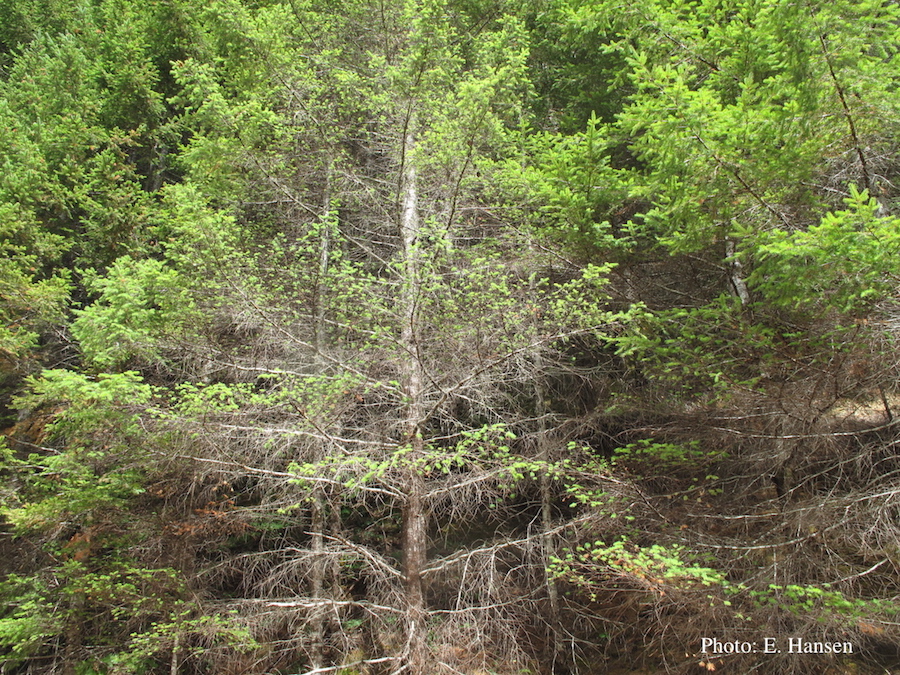 |
P. cambivora sporangium 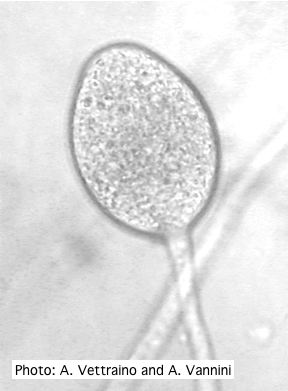 Ovoid non-papillate sporangia with well-rounded base and simple sporangiophore |
P. agathidicida oospores  Oospores of P. agathidicida in the roots of kauri seedlings inoculated with P. agathidicida. The root has been cleared with potassium hydroxide and bleached with peroxide, before being stained with Trypan Blue |
|
P. frigida oogonium  Oogonium and oospore with amphigynous antheridium |
P. tentaculata sporangium 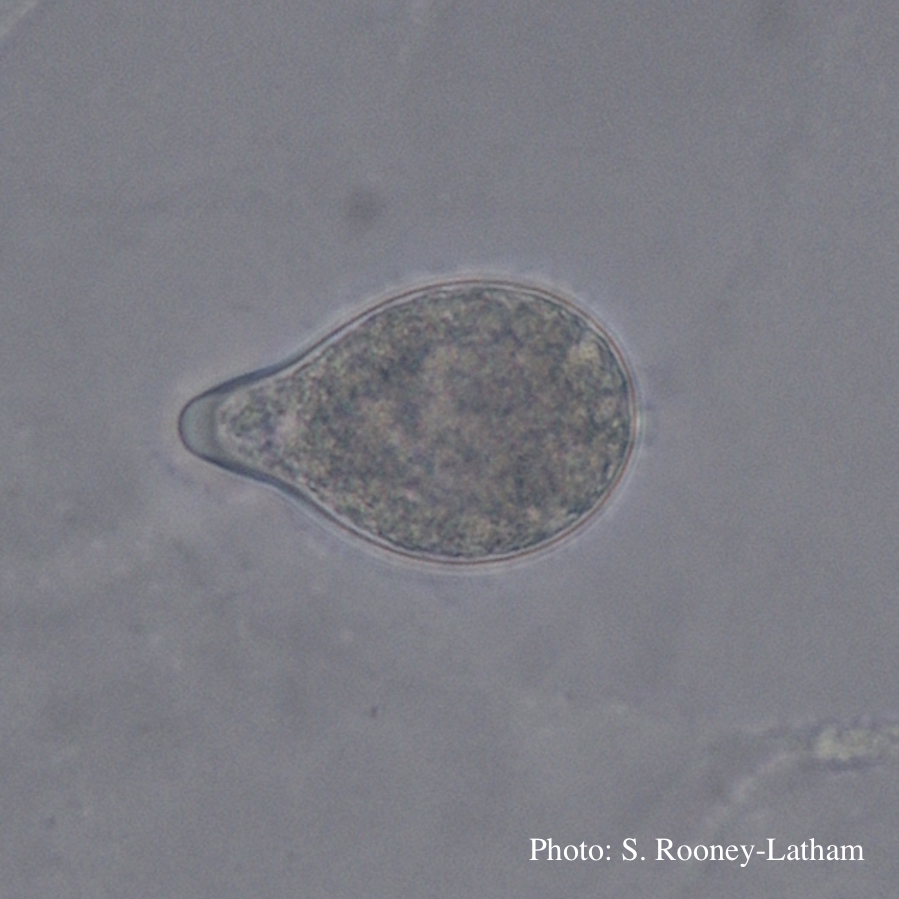 Papillate sporangium of P. tentaculata with an elongated neck or beak. |
P. pinifolia sporulation 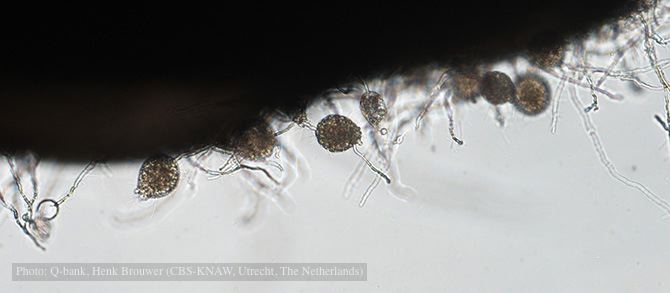 Sporulation on edge of hemp seed, photo from Q-bank, used with permission. |
|
Dead Port Orford Cedar 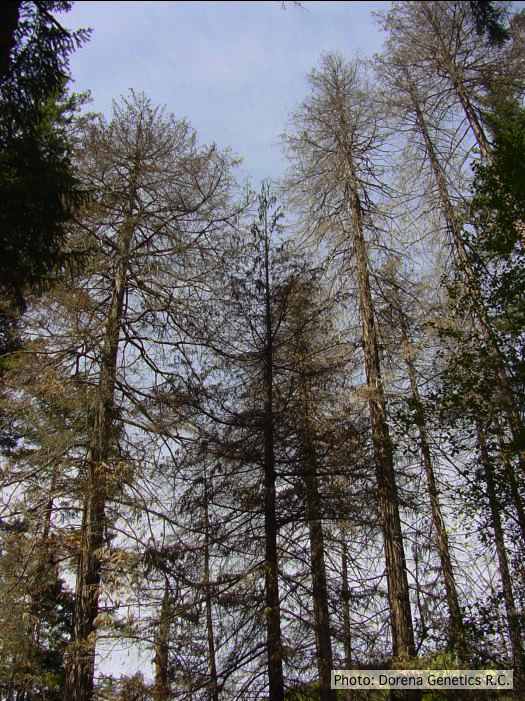 Dead Chamaecyparis lawsoniana, BLM Roseburg District in Oregon |
P. cactorum bleeding canker 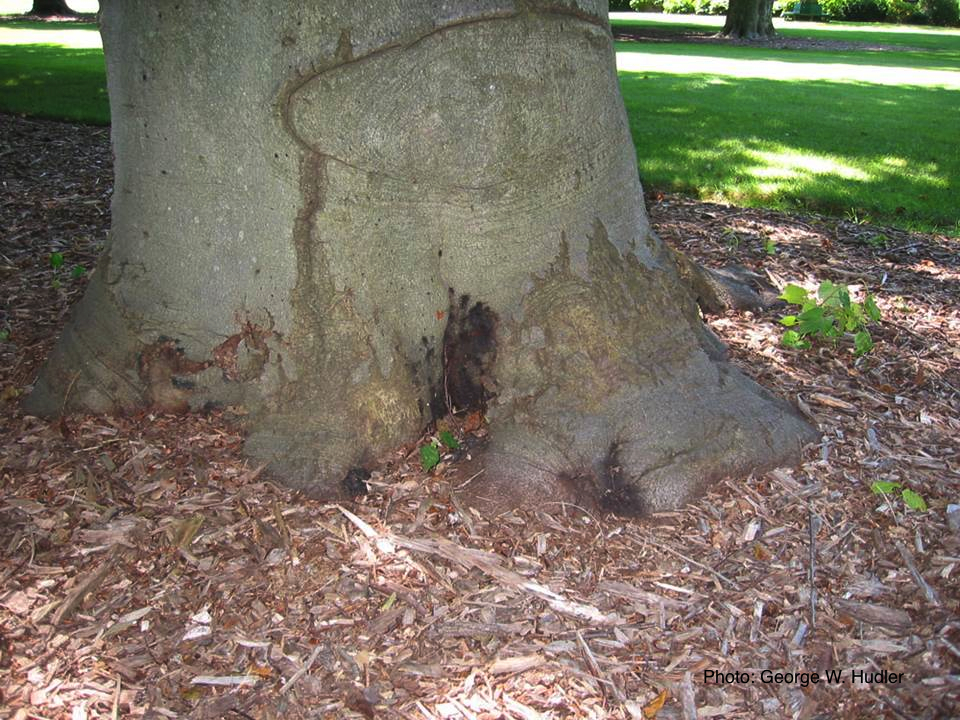 Bleeding canker on European beech (Fagus sylvatica) |
P. lateralis on Port Orford cedar 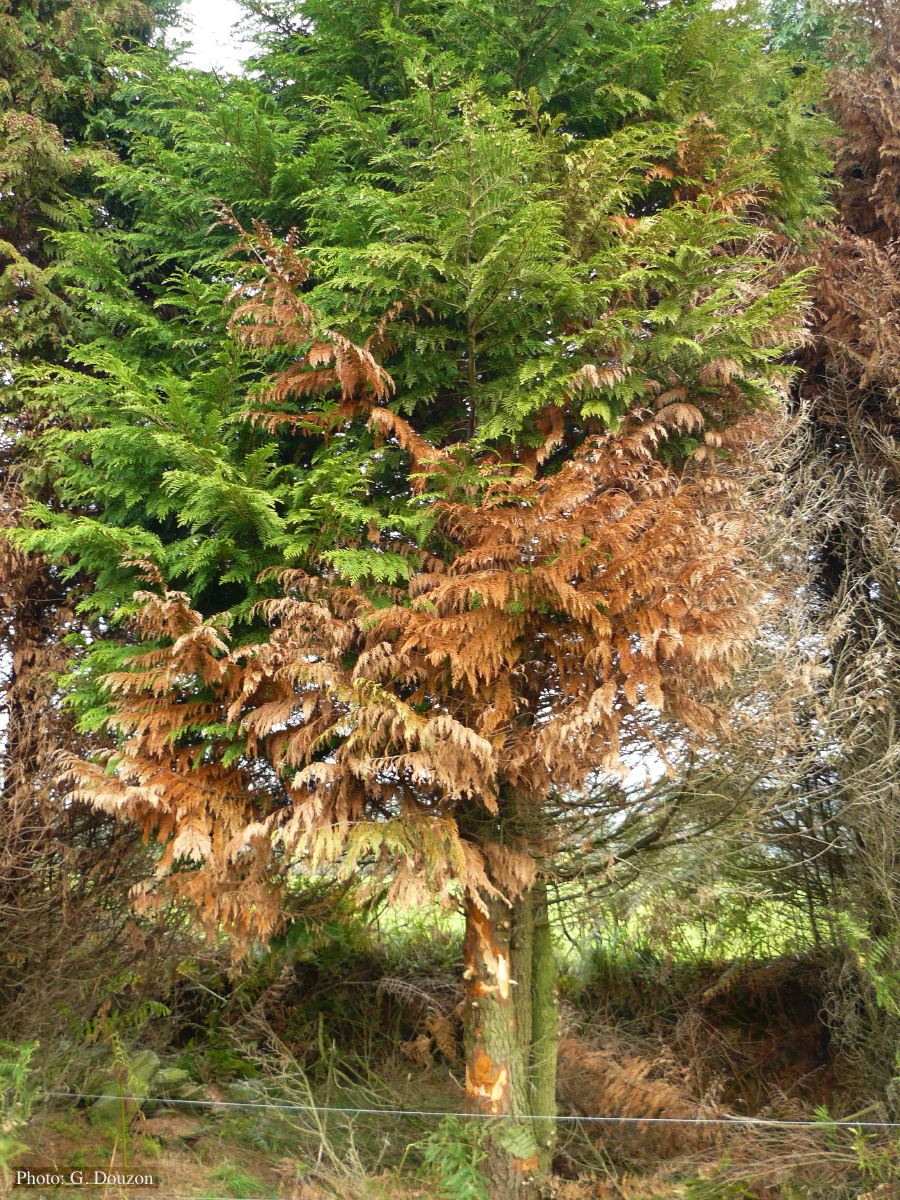 Localized branch infection of Chaemacyparis lawsoniana in Lopérec, France |
|
P. pluvialis colony morphology on carrot agar  Colony morphology on carrot agar at 20 days |
P. nicotianae sporangia  Noncaducous sporangium showing ovoid shape and papillate condition. (Fitopatol. bras. 2005) |
P. pluvialis sporangia.  P. pluvialis sporangia on tape peel from infected Douglas-fir needle. |