

Bark cracks with black ooze in coast live oak, a symptom of P. ramorum canker.
Photo Gallery
Site will be retired 9/1/2026
This site is no longer being developed and will be retired on September 1, 2026. Please contact us if you have any questions or would like to provide support to continue the project.
|
P. ramorum bleeding canker 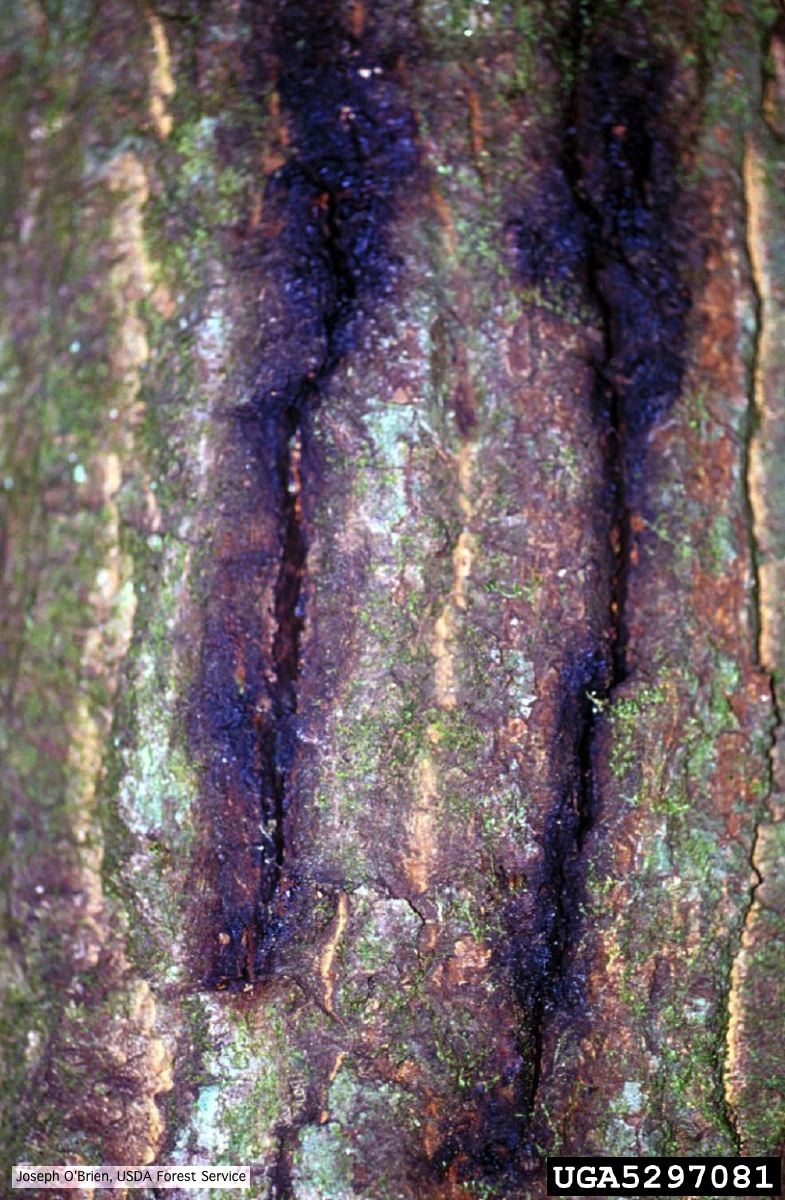 |
Black pod disease of cacao caused by P. palmivora 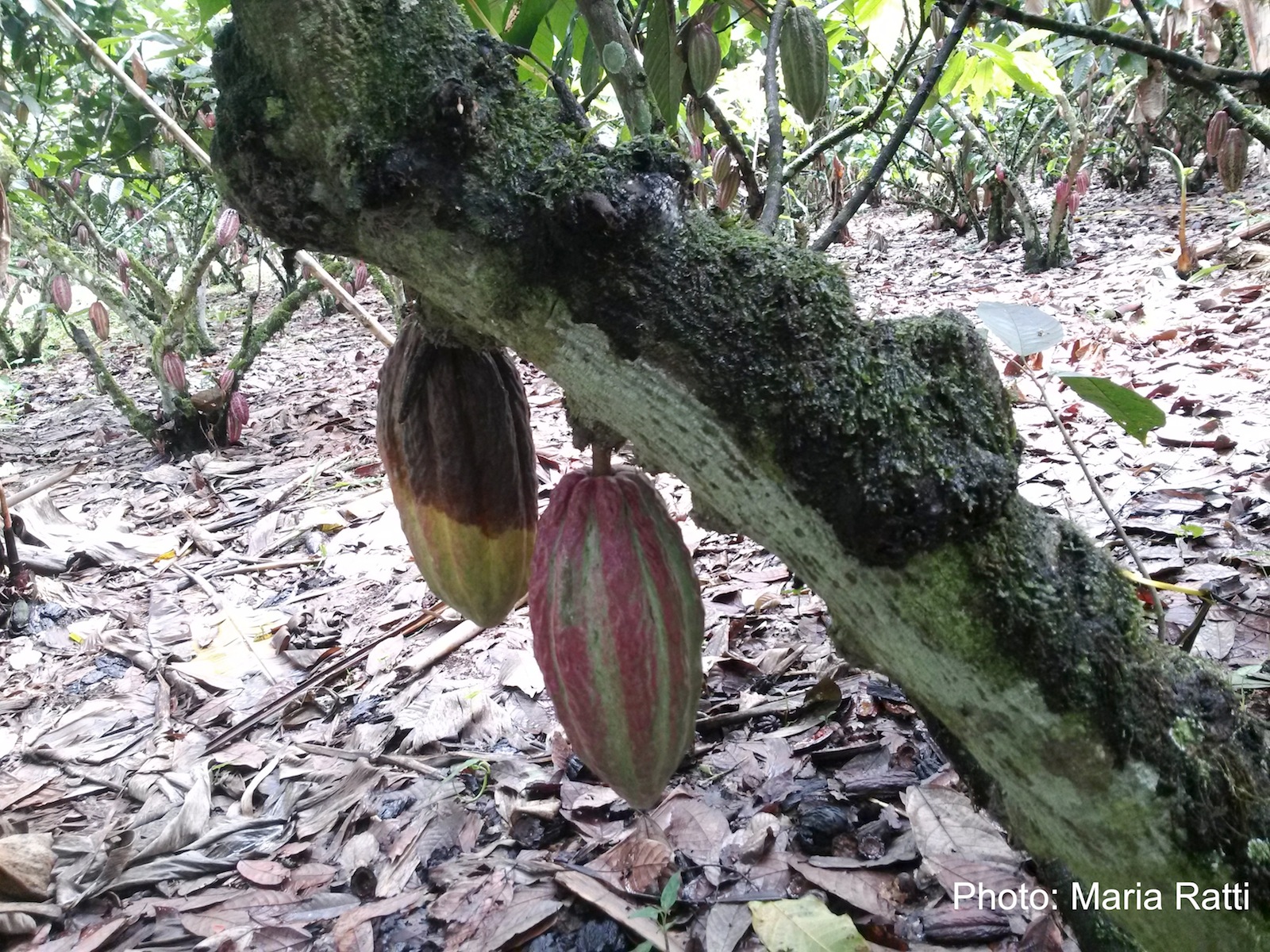 Black pod of cacao in Ecuador caused by P. palmivora (see lesioned fruit on left). |
P. pseudosyringae sporangium 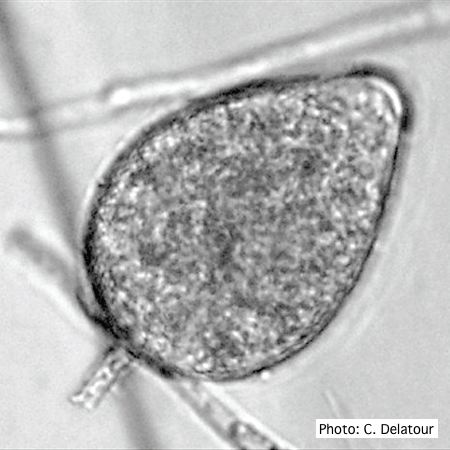 Ovoid, semipapillate sporangia showing medium length pedicel |
|
P. ramorum colony morphology on PDA 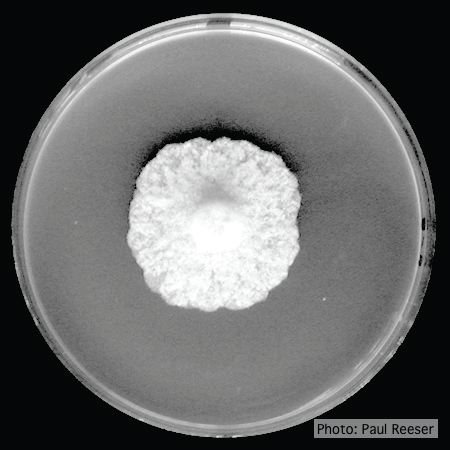 P. ramorum colony morphology on PDA |
P. cactorum bleeding canker 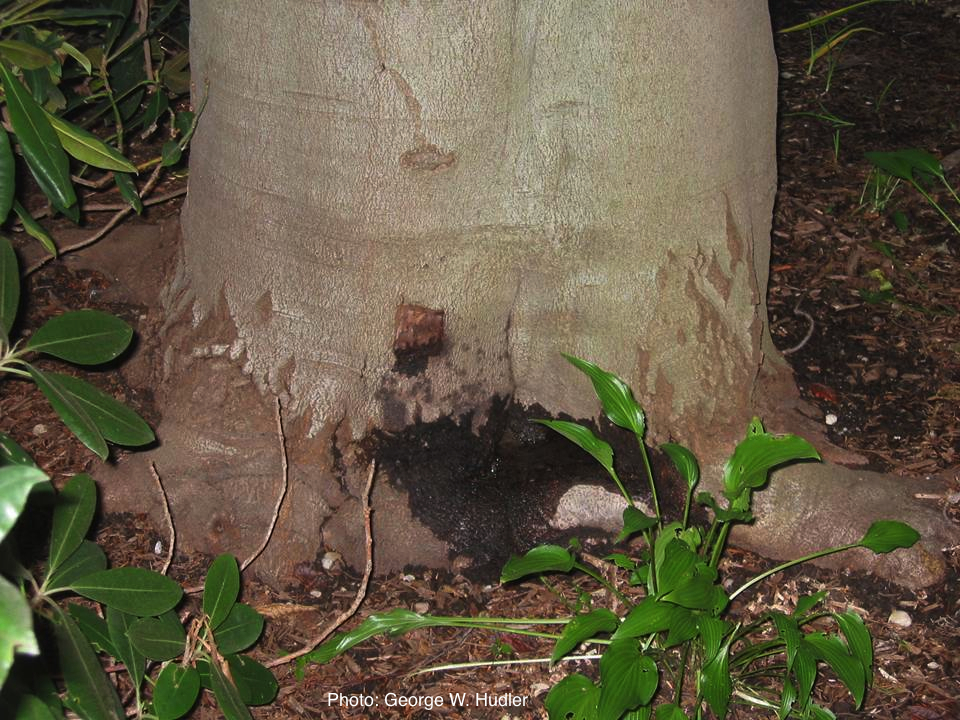 Bleeding canker on European beech (Fagus sylvatica) |
P. siskiyouensis bleeding canker  Bole lesions in the tissues under the bark of a bleeding canker: discoloration in the secondary phloem tissue |
|
P. pinifolia coenocytic hyphae 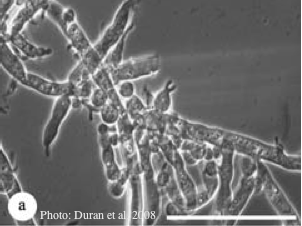 Coenocytic hyphae (from Duran et al. 2008). Scale bar = 20 μm. |
P. katsurae sporangia 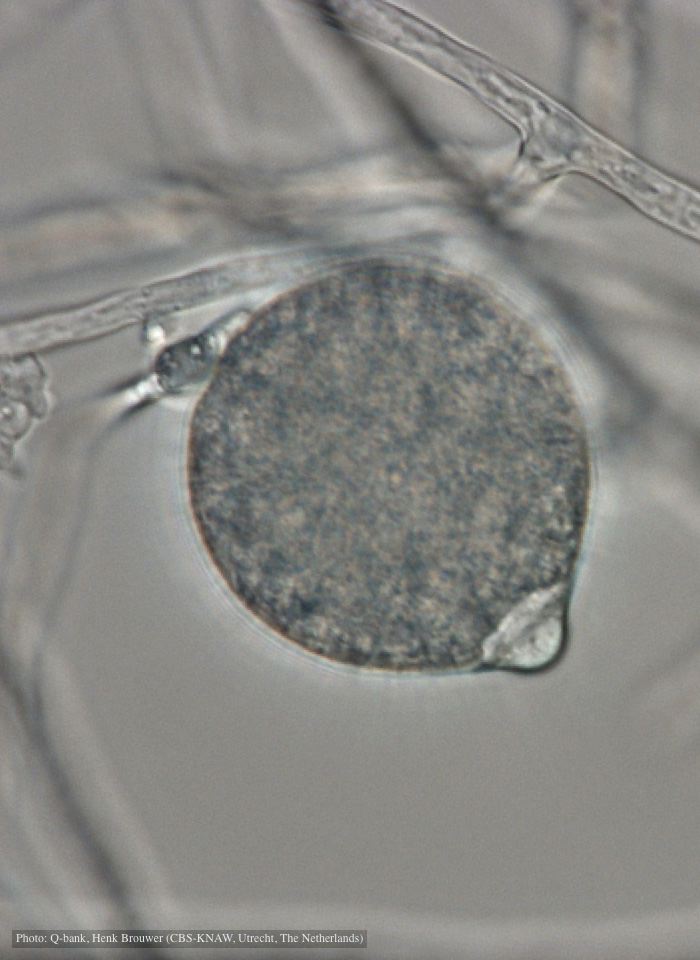 Papillate, non-caducous sporangium with differentiated content; photo used with permission from Q-bank |
P. pluvialis on Pinus radiata in New Zealand  Pinus radiata needles showing colour changes following infection with red needle cast disease. The tissues around the initial infection at the base or along the needle senesce, and change yellow and then brown as indicated by the arrows before the needles cast. |
|
P. nemorosa colony morphology on PDA  Colony morphology on PDA at 14 days |
P. ramorum chlamydospores 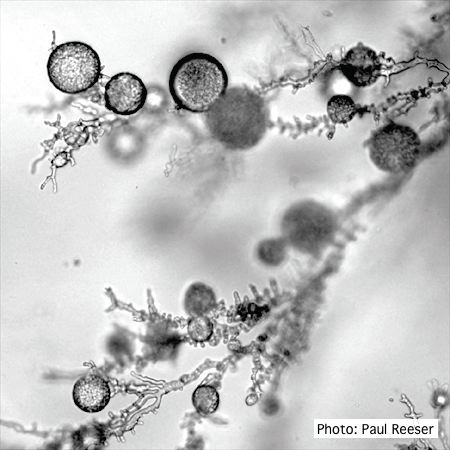 P. ramorum chlamydospores |
P. alni canker on gray alder 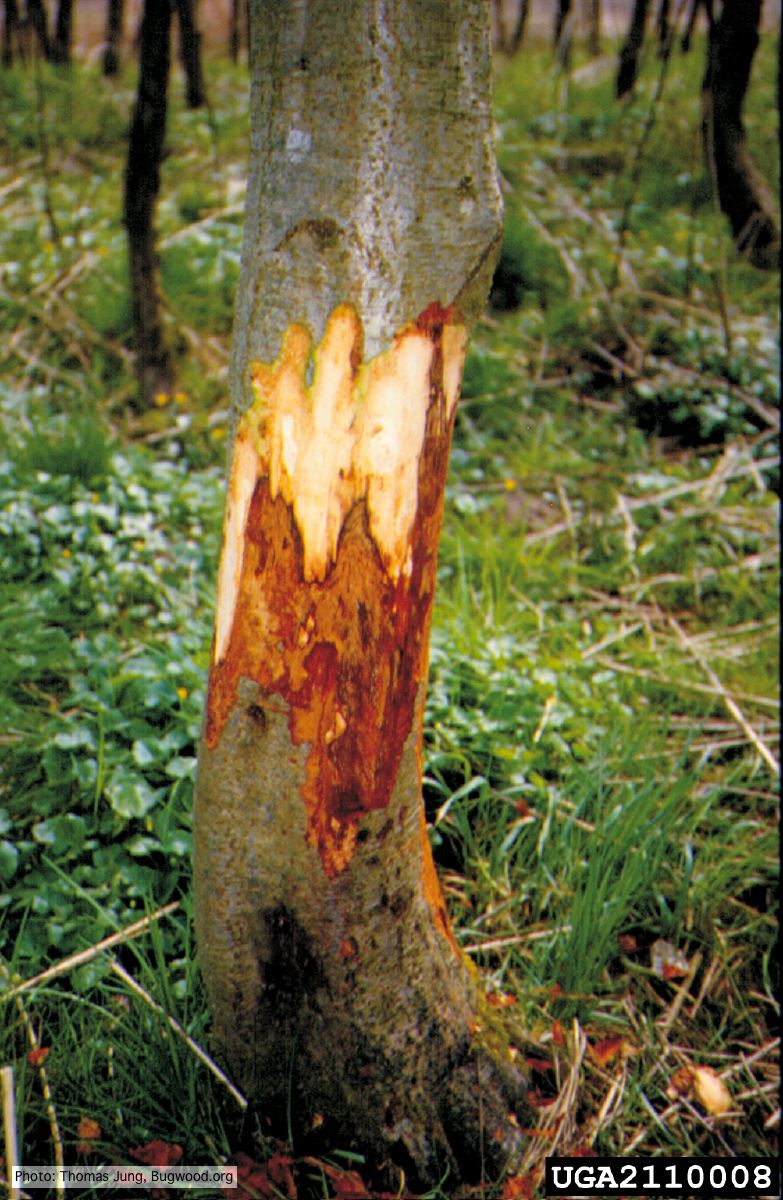 Grey alder (A. incana) with collar rot caused by P. alni |