


Looping hyphae commonly seen with P. tentaculata on PARP media
Photo Gallery
Site will be retired 9/1/2026
This site is no longer being developed and will be retired on September 1, 2026. Please contact us if you have any questions or would like to provide support to continue the project.
|
P. tentaculata hyphae 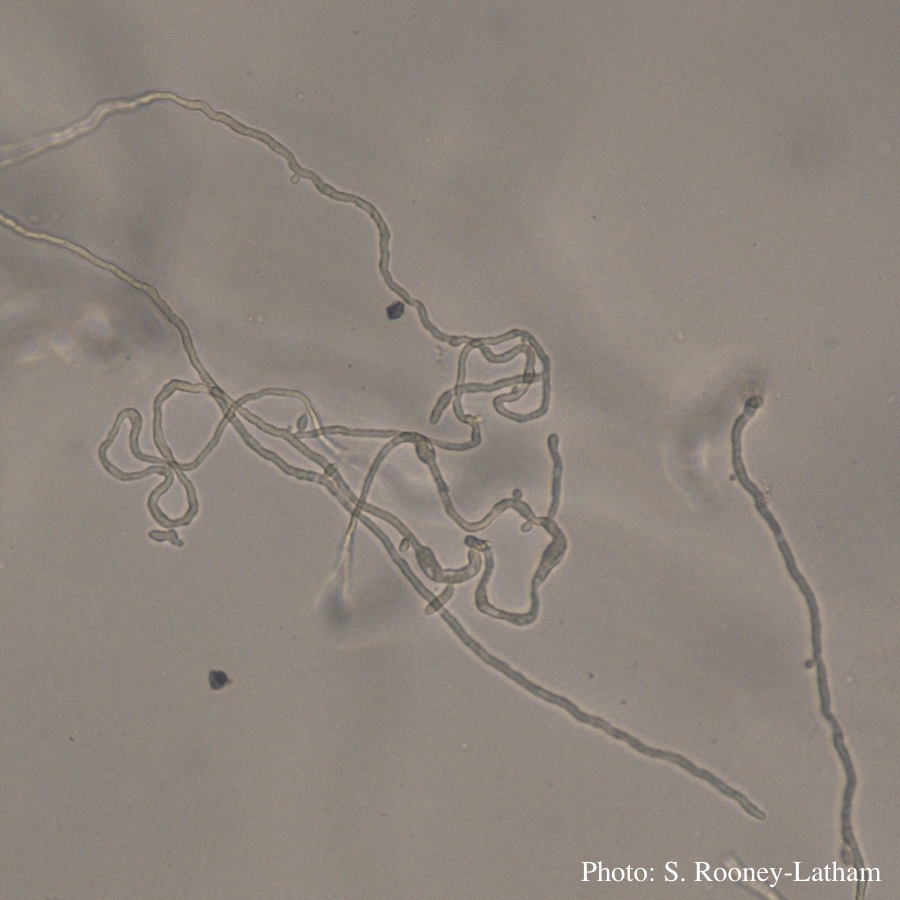 |
P. tentaculata microscopic characteristics 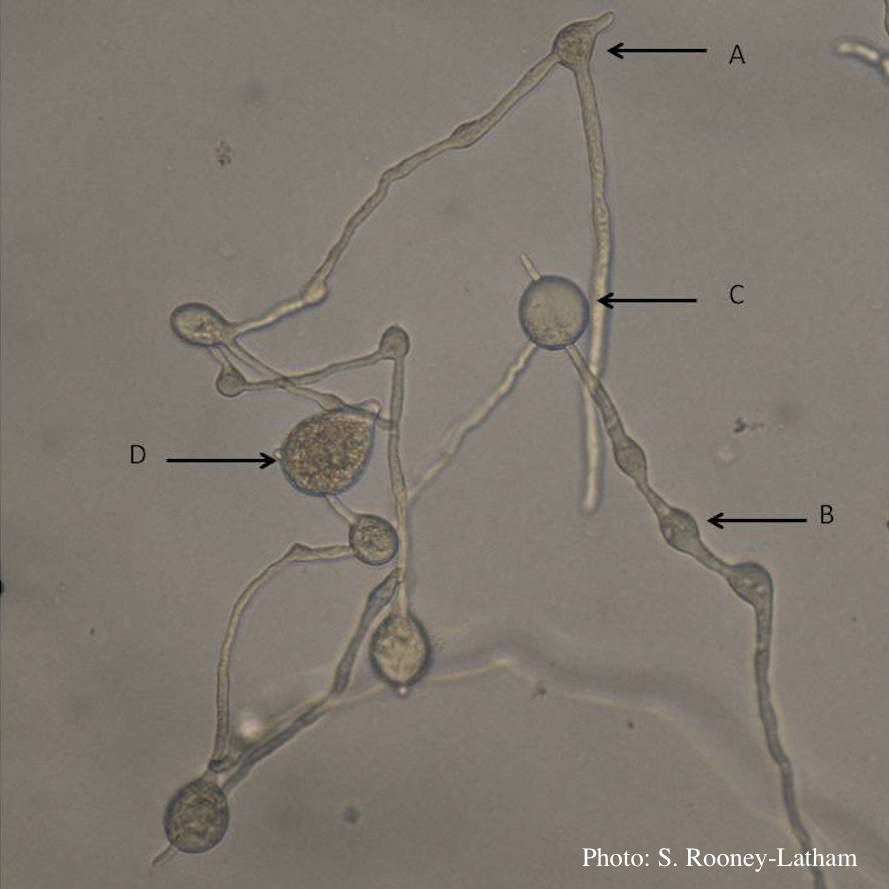 Hyphal swellings occuring at branching points of Mycelium (A), Intercalary hyphal swellings (B), Chlamydospore (C ), Sporangia (D) |
P. tentaculata chlamydospore 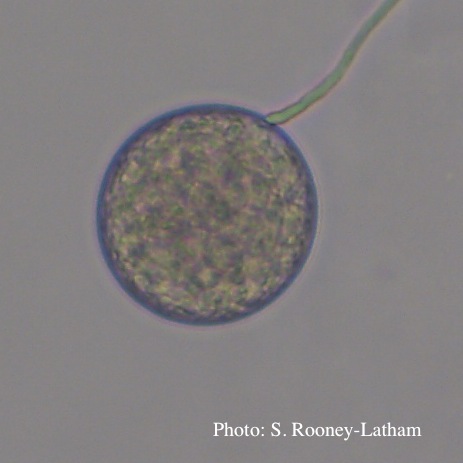 Terminal chlamydospore of P. tentaculata |
|
P. tentaculata chlamydospore  P. tentaculata chlamydospore with short hyphal projection |
P. tentaculata on V-8 media 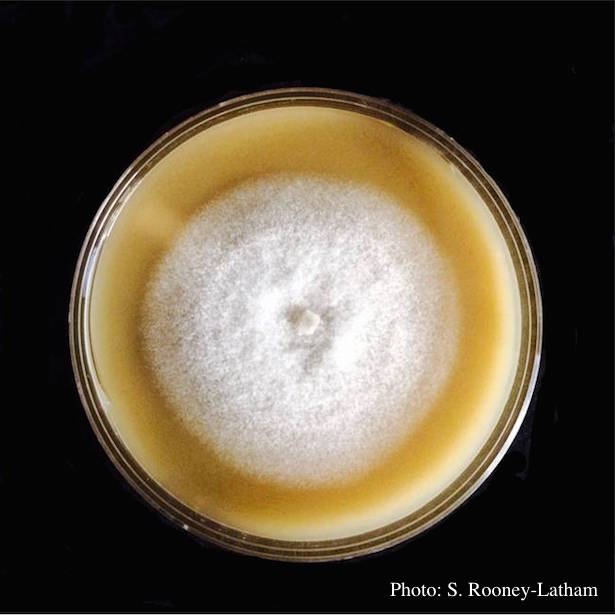 Culture of P. tentaculata on V-8 media |
P. tentaculata sporangium 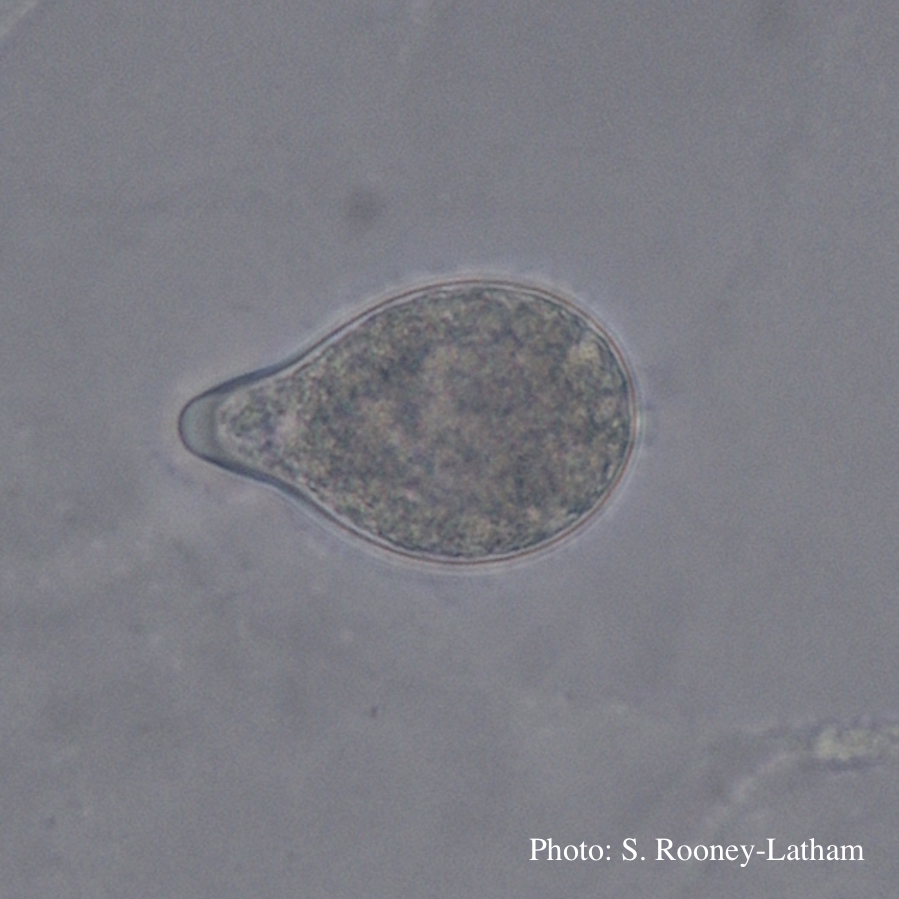 Papillate sporangium of P. tentaculata with an elongated neck or beak. |
|
P. tentaculata disease symptoms on sticky monkey flower 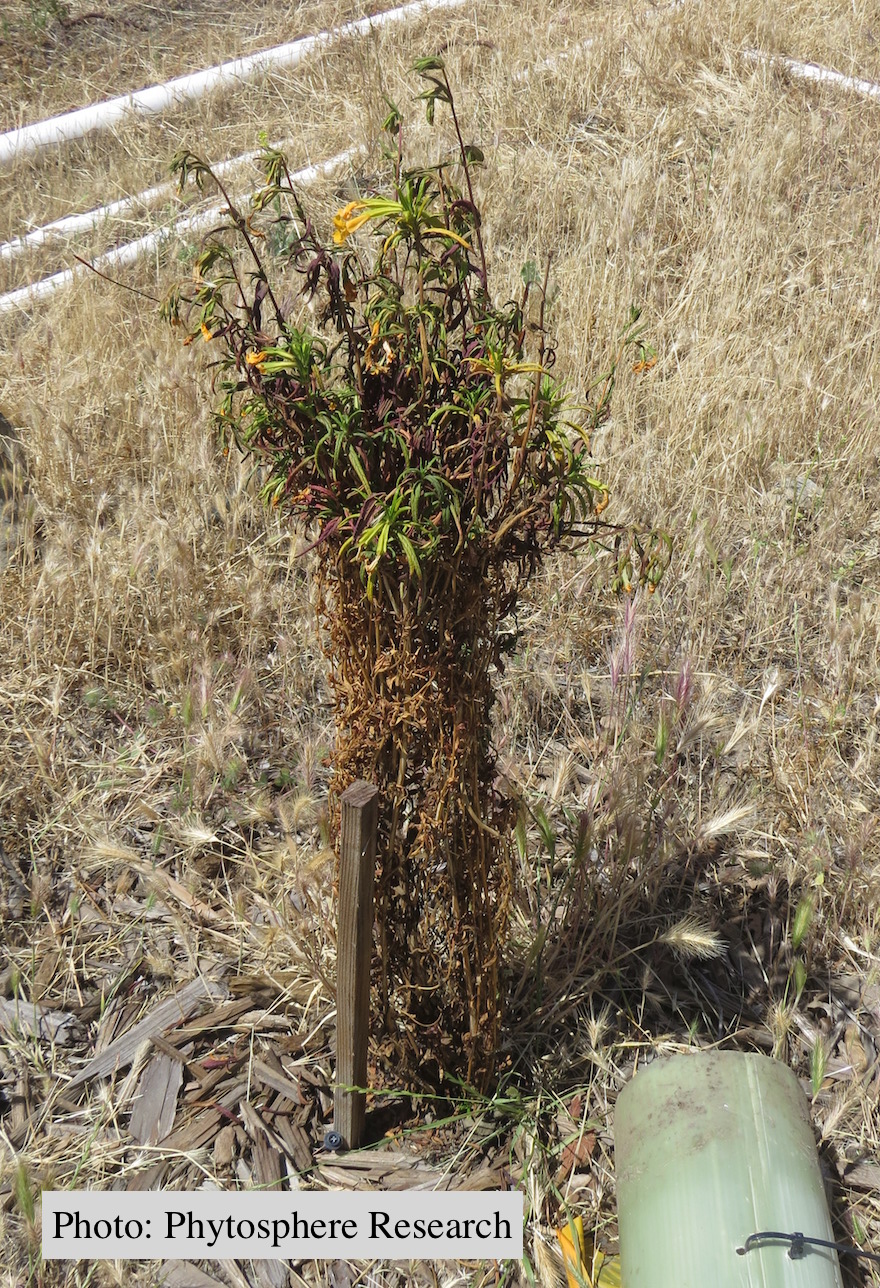 Outplanted sticky monkey flower (Diplacus aurantiacus) infected with P. |
P. tentaculata disease symptoms on California mugwort 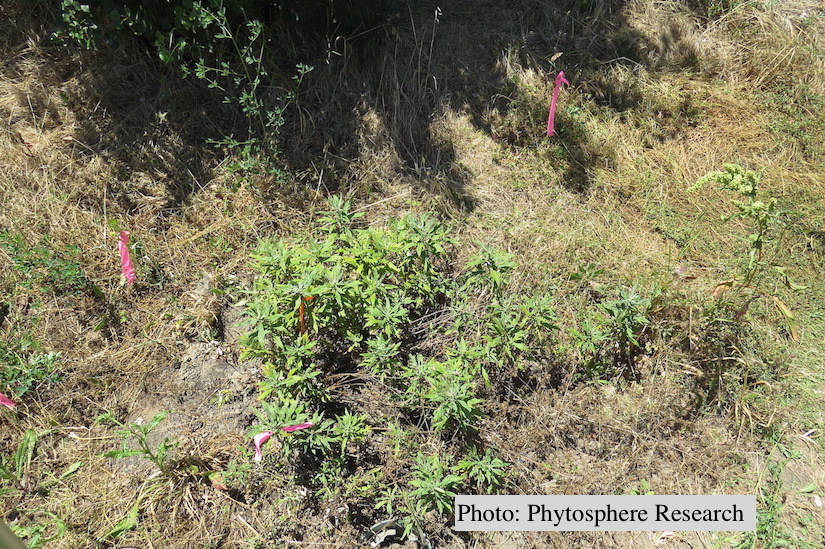 Outplanted California mugwort (Artemisia douglasiana) infected with P. tentaculata, 4.5 years after planting. Plant shows stunting and chlorosis. (P. cryptogea and P. lacustris were also baited from roots/soil of this plant). |
P. tentaculata sporangium  Papillate sporangium of P. tentaculata |
|
P. tentaculata disease symptoms on California mugwort  Nursery grown California mugwort plant (Artemisia douglasiana) infected with P. tentaculata and exhibiting severe root and crown rot |
P. tentaculata sporangium 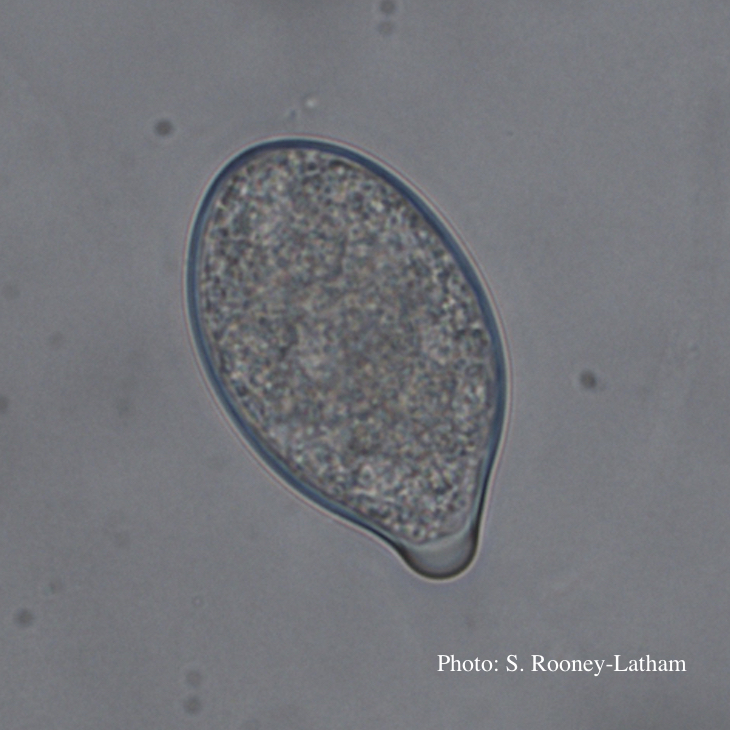 Papillate sporangium of P. tentaculata |
P. tentaculata disease symptoms on sticky monkey flower 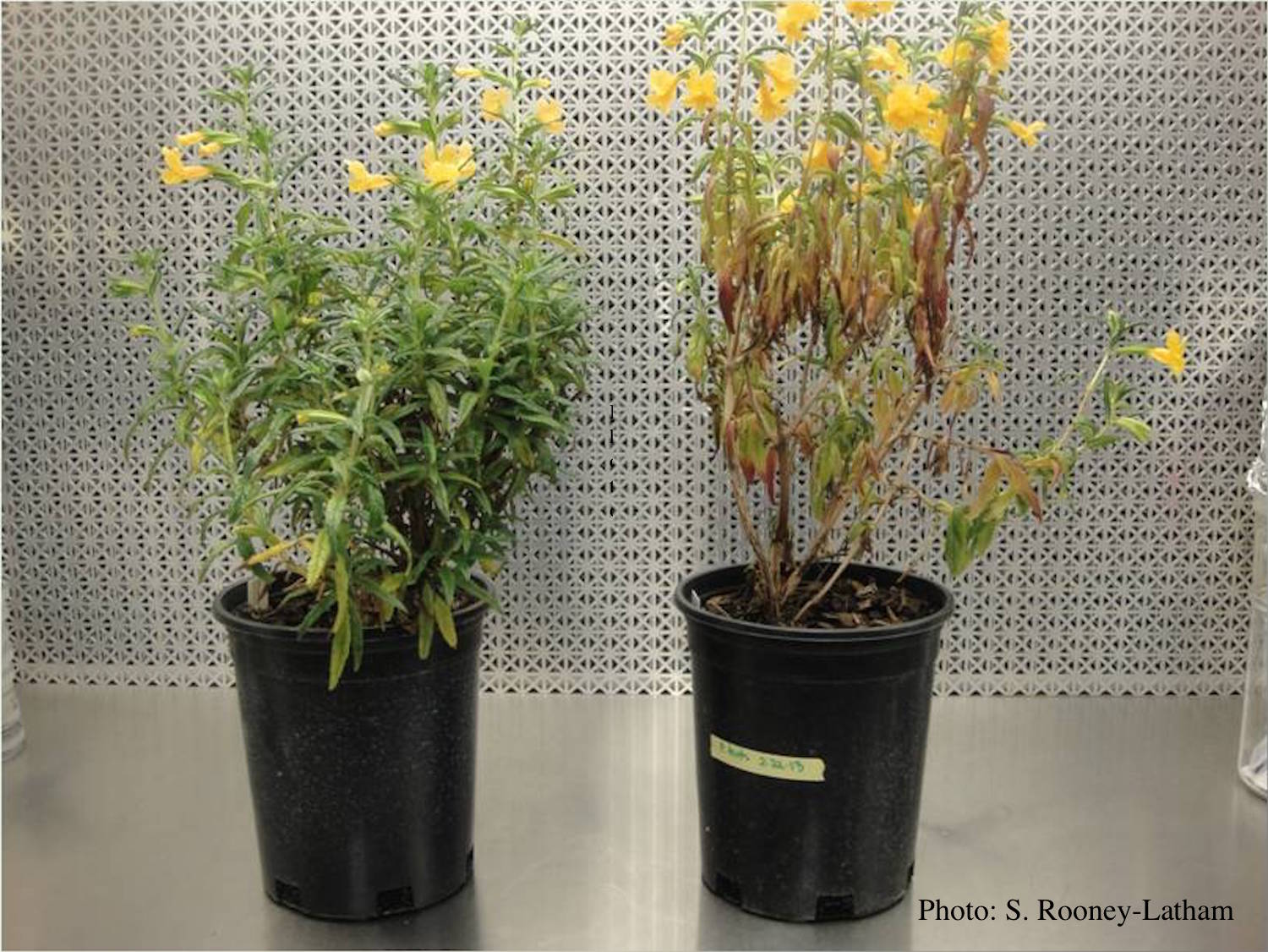 Crown and root rot (left) on sticky monkey flower (Diplacus aurantiacus) compared with a control (right) |